
Home > Nickel Alloy > Nickel Alloy 201 Stud Bolts
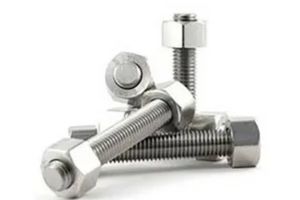
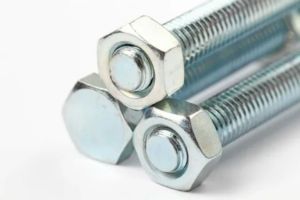
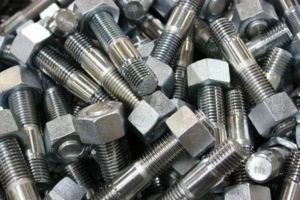
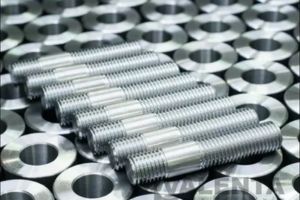
Set out on a path to outstanding performance with our Nickel Alloy 201 Stud Bolts, prominently displayed on our product pages. We take great pride in offering a wide selection of top-tier solutions carefully custom-made to satisfy the varied requirements of many industries. Explore a world of flexibility and reliability with our thoughtfully engineered products, skillfully created to excel across a wide array of industrial applications. Our Nickel Alloy 201 Stud Bolts demonstrate precision engineering that adheres to rigorous industry standards, guaranteeing durability and outstanding resistance to corrosion. As a dependable retailer, we place customer satisfaction first by providing adaptable options, competitive pricing, and fast delivery. Whether in construction, manufacturing, or engineering endeavors, our Nickel Alloy 201 Stud Bolts provide unmatched performance, setting new benchmarks for excellence and innovation. Rely on our steadfast dedication to quality and reliability for your bolting requirements
| Grade | Nickel 200/201 (UNS N02200 /N02201) |
| Specifications | ASTM B 160/164, ASME SB 160/164 |
| Dimension | ASTM, IS, BS and all International Standards |
| Length | 3mm to 200mm |
| Size | M3 – M56 | 3/6″ to 2″ | Custom Sizes |
| Types | Threaded Rod, Class A double ended stud, Tie Rod, Double Ended Stud, Stud Bolts, Bronze Hex Studs, Threaded Studs etc etc. |
| Element | Density | Melting Point | Tensile Strength | Yield Strength (0.2%Offset) | Elongation |
| Nickel 201 | 8.9 g/cm3 | 1446 °C (2635 °F) | Psi – 67000 , MPa – 462 | Psi – 21500 , MPa – 148 | 45 % |
|
Grade |
Ni |
C |
Mo |
Mn |
Si |
Fe |
P |
S |
Cu |
Cr |
|
Nickel 201 |
Balance |
0.15 max |
– |
0.35 max |
0.35 max |
0.40 max |
– |
0.01 max |
0.25 max |
– |
At Koasteel, we take pride in being the largest supplier and manufacturer in the New Zealand, delivering advanced solutions for every one of your piping requirements. With cutting-edge manufacturing facilities strategically positioned in the New Zealand, we maintain an extensive stock of more than 25,000 tons of top-quality materials ready and available on hand.
Reach out to us for a fast quote on your requirement.
We supply these Nickle Alloy 201 Stud Bolts in accordance with DIN, ISO, JIS or ANSI Standard.
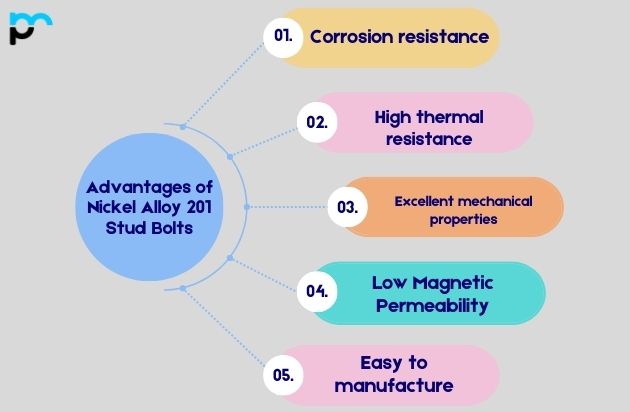
Corrosion resistance: Nickel alloy 201 offers outstanding resistance to corrosion, particularly in acidic and alkaline conditions. This quality makes it well-suited for uses where exposure to corrosive substances is a concern, including chemical plants, marine settings and oil refineries.
High thermal resistance: With its strong thermal mechanical characteristics, the alloy is well-suited for hot environments such as gas turbines, heat exchangers and nuclear reactors
Excellent mechanical properties: Nickel alloy 201 delivers excellent mechanical strength and flexibility, enabling it to endure high stresses without deforming or failing. As a result, it is well-suited for structural components, stud bolts and other fasteners.
Low Magnetic Permeability: Nickel alloy 201 has low magnetic permeability, which makes it ideal for uses that call for reduced magnetic interference, such as in electronic devices or MRI machines.
Easy to manufacture: This alloy machines and welds easily, making it difficult to manufacture complex components and assemblies.
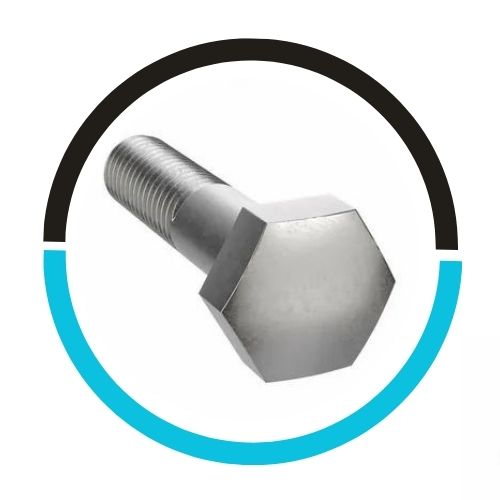
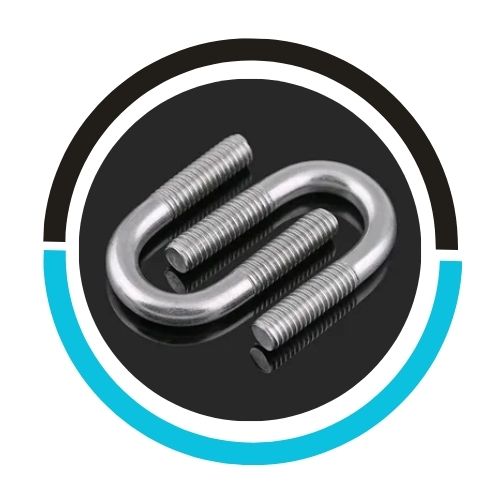
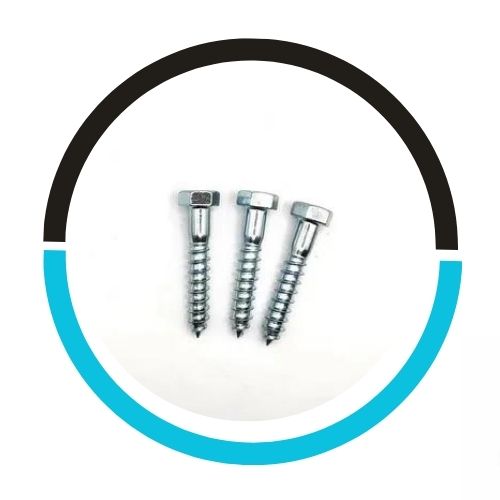
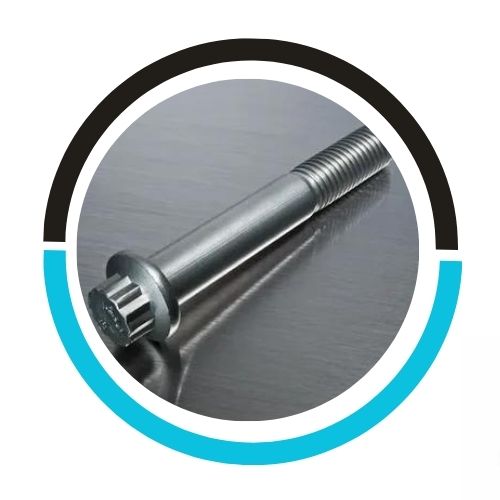
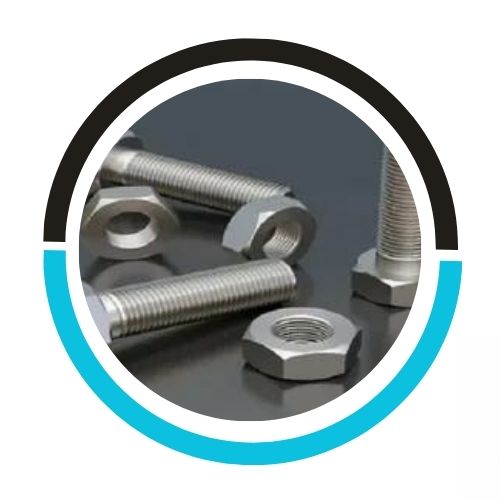
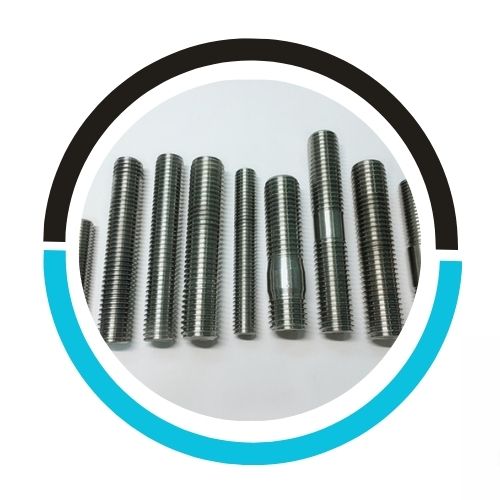
Nickel Alloy 201 Stud Bolts serve applications as varied as the industries that rely on them, led chiefly by the aerospace, railway, construction and automotive industries along with petrochemical, nuclear, medical, Oil & Gas, Chemical, Pharmaceutical, Food & Beverage, Nuclear, Thermal Power plants, Paper and Pulp, marine and mining, etc.
Corrosion Resistance: Nickel alloy 201 stud bolts offer exceptional resistance to corrosion, which makes them well suited for environments where corrosion poses a problem. They see frequent use in the chemical sector, marine settings and oil production zones.
Thermal stability: These stud bolts are able to endure elevated temperatures without sacrificing their mechanical properties, which makes them appropriate for use in hot settings like heat exchangers, boilers and furnaces
Electrical Conductivity: Nickel Alloy 201 provides outstanding electrical conductivity, making it a good fit for electrical fields and applications where electrical conductivity matters.
Low Magnetic Permeability: The nickel alloy 201 features a low magnetic permeability, which makes it a good choice for applications where reducing magnetic interference is important, such as electronic devices and instruments used in sensitive scientific applications in
Chemical applications: Because of their capacity to endure high temperatures thanks to corrosion resistance, nickel alloy 201 stud bolts are frequently employed in chemical applications like reactors, vessels and piping systems.
Understand application requirements: Identify the setting in which the stud bolt will be applied. Take into account elements like temperature, pressure, corrosion resistance, and the mechanical demands of the application.
Corrosion Resistance: Nickel Alloy 201 is recognized for its outstanding resistance to corrosion in both acidic and alkaline settings. Verify that the stud bolts are able to endure the particular corrosive components present in your application.
Temperature Resistance: Establish the temperature at which the stud bolt will function. Nickel Alloy 201 provides excellent thermal stability, but should your application involve extreme temperatures, you might have to look at a different nickel alloy with greater heat resistance.
Mechanical properties: Identify the characteristics that matter for your application, including tensile strength, yield strength, and hardness. Nickel Alloy 201 delivers mechanical quality, but confirm that it aligns with what your application demands.
Size and Dimensions: Establish the suitable size and dimensions of stud bolts according to your application needs, covering thread size, length, and diameter
Yes,Nickel Alloy 201 can be recycled. Nickel alloys, such as Nickel Alloy 201, are frequently recycled because of their high value and the economic advantages that come with recycling metals. The recycling of nickel alloys entails melting the material down and repurposing it to make new products or components. This practice helps preserve natural resources and lessens the environmental impact tied to mining and processing raw materials. Therefore, if you own Nickel Alloy 201 stud bolts that are no longer being used, recycling them is a sustainable choice.
Nickel Alloy 201 stud bolts are suitable for underground use thanks to their outstanding corrosion resistance, particularly in acidic settings. They hold up under demanding conditions, including underground contact with moisture, soil, and chemicals. Because of their durability, they work well for long-term deployment in underground installations, delivering dependable performance.
When installing Nickel Alloy 201 stud bolts, confirm that the material suits the surrounding environment, taking into account elements such as temperature, corrosion, and chemical exposure. Apply the correct fastening methods and torque values, and check that everything meets industry standards. Examine the bolts for flaws or damage prior to installation to guarantee the best performance and durability.
Nickel Alloy 201 stud bolts are typically not advised for cryogenic uses because of their tendency toward low-temperature embrittlement. Under cryogenic conditions, they can turn brittle, undermining their mechanical properties. It’s recommended to select materials purpose-built for cryogenic service to guarantee safety and reliability in such settings.
Mail: sales@koasteel.nz