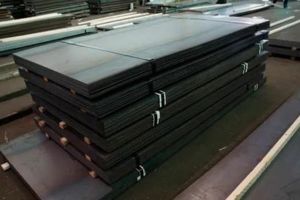
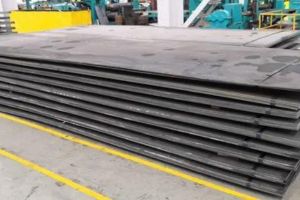
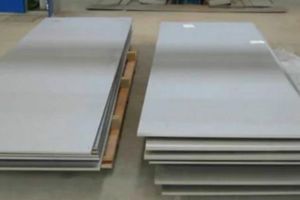
Invar 36 Sheet and Plates Manufacturer & Supplier in Christchurch, New Zealand.
Invar 36 Industrial Sheet and Plates Price In New Zealand, UNS K93603 Sheets Dealer In Wellington, Invar 1.3912 Sheets Exporter In New Zealand, UNS K93600 Sheet, Invar 36 Plates Dealer In Auckland, Invar 36 Strips Manufacturer In Christchurch, New Zealand.
Table of Contents
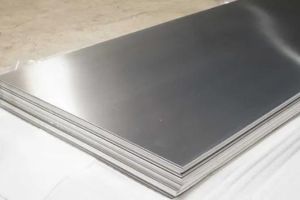
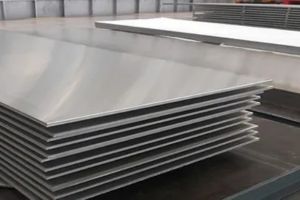
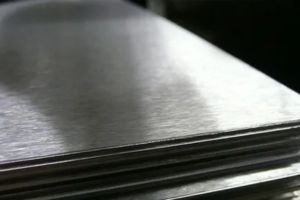
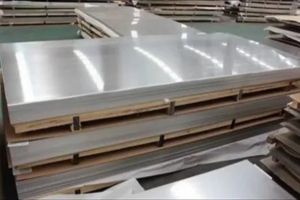
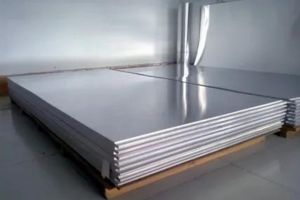
Explore superior quality in Invar 36 Sheets and Plates through our extensive selection, thoughtfully custom-built to satisfy varied industrial and mechanical needs. Crafted with meticulous precision and rigorous adherence to industry standards, our Invar 36 Sheets and Plates provide outstanding dimensional stability, low thermal expansion, and excellent resistance to temperature fluctuations across a broad range of applications. Through tailored solutions, competitive rates, and timely delivery, we remain dedicated to surpassing customer expectations. Enhance your projects with our reliable Invar 36 Sheets and Plates, backed by our steadfast commitment to excellence.
Soft, Hard, Half Hard, Quarter Hard, Spring Hard etc.
Value Added Service :
Cladding, Heat Treatment, Annealed, Pickling, Polish, Rolling, Cutting, Bending, Forging, Minor Fabrication Etc.
Chemical Composition of Invar 36 Sheet and Plates
Grade
C
Mn
Si
S
Co
Fe
Mo
Al
Invar 36
.008 max
.30 max
.15 max
.001 max
.35 max
63.0 max
.02 max
.03 max
Mechanical Properties of Invar 36 Sheet and Plates
Element
Tensile Strength
Yield Strength (0.2%Offset)
Elongation
Invar 36
KSI (MPa) 63 / (430) Max
KSI (MPa)-38 / (260) Max
30 %
Invar Alloy 36 Sheets and Plates Price In New Zealand, Nickel Alloy 36 Sheets Dealer In Auckland, Invar 36 Shims, Invar 36 Perforated Sheets Stockist In Wellington, Invar 36 Sheet Supplier In Auckland, New Zealand.
Top Invar 36 Sheet and Plates Manufacturing Company in Auckland
At Koasteel, we take pride in being the largest supplier and manufacturer in the New Zealand, delivering advanced solutions for all your piping requirements. With cutting-edge production facilities strategically situated in the New Zealand, we hold an extensive inventory of more than 25,000 tons of top-quality materials kept ready in stock.
Reach out to us for a fast quote tailored to your requirement.
We supply these Invar 36 Sheet and Plates conforming to DIN, ISO, JIS or ANSI Standard.
Invar 36 Sheets Price In New Zealand, Invar 36 Plain Plates Dealer In Christchurch, Alloy 36 Shim, Invar 36 Shim Sheets Exporter In Auckland, Nilo 36 Hot Rolled Sheet Supplier In New Zealand, Invar 36 Soft Plates Manufacturer In Christchurch, New Zealand.
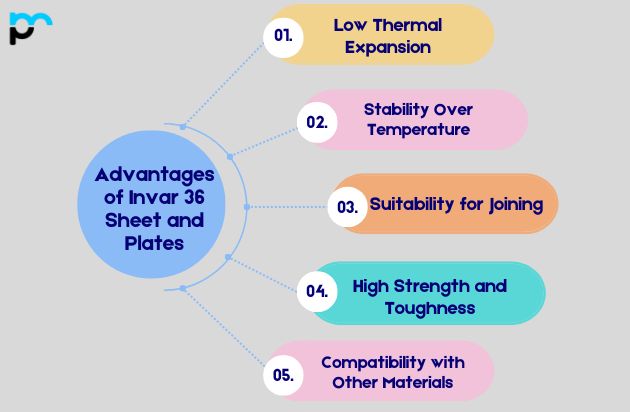
Advantages of Invar 36 Sheet and Plates
Low Thermal Expansion: A key benefit of Invar 36 is its remarkably low coefficient of thermal expansion. As a result, it expands and contracts very little when temperatures shift, which makes it perfect for uses that demand dimensional stability, like precision instruments and scientific devices.
Stability Over Temperature: Invar 36 holds its size and form across a broad temperature span, ranging from cryogenic levels up to about 400°C (750°F). Such stability is vital in settings where temperature fluctuations might otherwise lead materials to warp or distort.
Suitability for Joining: Invar 36 can be joined by welding through conventional techniques, which boosts its flexibility in manufacturing operations. This permits the production of intricate shapes and structures without undermining its thermal expansion characteristics.
High Strength and Toughness: Invar 36 shows solid mechanical strength and toughness, rendering it durable and dependable across a range of applications. It is able to endure mechanical stress and vibrations without notable deformation.
Compatibility with Other Materials: Owing to its steady thermal behavior, it can be paired with other materials, such as ceramics and additional metals. This renders it well-suited for composite structures where various materials must function together seamlessly.
Types of Invar 36 Sheet and Plates
Invar 36 Sheets
Invar Alloy 36 Sheets
Invar UNS K93600 Sheet
Invar 36 Hot Rolled Sheet
Invar 36 HR Sheets
Invar 36 Cold Rolled Plates
Application Industry
Owing to their outstanding characteristics, Invar 36 Sheet and Platesserve as vital parts throughout numerous industrial fields. Well known for their resistance to corrosion, they are extensively used in marine settings, withstanding the harsh conditions of saltwater exposure with durability and dependability. Within the construction sector, stainless steel fasteners are central to structural assemblies, delivering firm connections while preserving structural integrity in outdoor and exposed conditions.
Oil & Gas Industry
Aviation Industry
Petro Chemical Industry
Power Generation Industry
Can Invar 36 Sheet and Plates be recycled after use?
Yes,Invar 36 Sheet and Plates are recyclable once they have been used. This alloy, made up mainly of iron and nickel, can be processed through standard metal recycling methods. Recycling makes it possible to reclaim valuable metals and lessens the environmental burden linked to mining and producing new materials.
Invar 36 Hot Rolled Plates Price In New Zealand, Bright Annealed Invar 36 Sheet and Plates Dealer In Auckland, Mirror Finish Invar 36 Plate Exporter In New Zealand, Pernifer 36 Sheets, 36 Invar Plates, Invar Alloy 36 Plates Manufacturer In Christchurch, New Zealand.