
Home > Nickel Alloy > Nickel Alloy 201 Forging
Set out on a path of outstanding performance and dependability with our Nickel Alloy 201 Forgings, meticulously custom-built to thrive in rigorous industrial applications. Crafted with precision and reinforced with remarkable durability, our Nickel Alloy 201 Forgings set a new standard for excellence in critical environments. Delivering exceptional corrosion resistance and lasting strength, these forgings surpass conventional materials, guaranteeing dependable performance wherever reliability matters most. Whether facing the high-pressure demands of oil and gas operations or the extreme temperatures of power generation, our Nickel Alloy 201 Forgings ensure unrivaled resilience and reliable functionality. Dedicated to exceeding your expectations, we provide customized solutions, competitive pricing, and prompt service, blending smoothly into your projects with precision and efficiency. Rely on our premium Nickel Alloy 201 Forgings, supported by steadfast commitment to quality and performance, to lift your projects to new heights of success.
| Grade | C | Mn | Si | S | Cu | Fe | Ni |
| Nickel 201 Forgings | 0.15 max | 0.35 max | 0.35 max | 0.01 max | 0.25 max | 0.40 max | 99.0 min |
| Element | Density | Melting Point | Tensile Strength | Yield Strength (0.2%Offset) | Elongation |
| Nickel 201 Forgings | 8.9 g/cm3 | 1446 °C (2635 °F) | Psi – 67000 , MPa – 462 | Psi – 21500 , MPa – 148 | 45 % |
| Specifications | ASTM B564, ASME SB564 |
|---|---|
| Standard | BS 3072, BS 3073, BS 3074, BS 3075, BS 3076, NA11 DIN 17740, 17750, 17751, 17752, 17753, 17754, DIN, ASTM, BS and all International Standards |
| Flat bar blocks | up to 27″ width and 15,000 lbs |
| Cylinders and sleeves | up to 50″ maximum O.D. and 65″ maximum length |
| Discs and hubs | up to 50″ diameter and 20,000 lbs |
| Rolled, hand forged or mandrel forged rings | up to 84″ maximum O.D. and 40″ maximum length |
| Rounds, shafts and step shafts | up to 144″ maximum length and 20,000 lbs |
At Koasteel, we’re proud to be the largest supplier and manufacturer in the New Zealand, delivering advanced solutions for every one of your piping requirements. With modern production facilities strategically positioned in the New Zealand, we maintain an extensive stock of more than 25,000 tons of top-quality materials on hand and ready to ship.
Reach out to us for a fast quote tailored to your needs.
We provide these Nickel Alloy 201 Forging in accordance with DIN, ISO, JIS or ANSI Standard.2
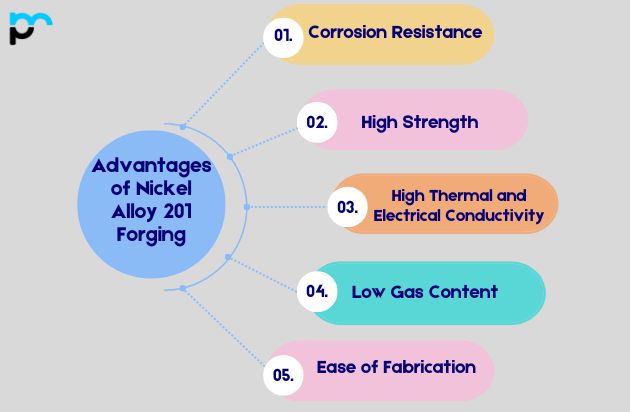
Corrosion Resistance: Nickel Alloy 201 offers strong resistance to a wide range of corrosive conditions, such as acids, alkalis, and neutral salts. This quality makes it well suited for uses where corrosion resistance is essential, like in the chemical processing sector.
High Thermal and Electrical Conductivity: It demonstrates outstanding heat and electrical conductivity, which makes it valuable for uses that demand these characteristics, such as in electrical parts and heat exchangers.
High Strength: Once it has gone through a forging process, Nickel Alloy 201 maintains solid mechanical qualities, such as high strength and toughness. This makes it appropriate for uses where strength and durability matter.
Low Gas Content: Nickel Alloy 201 contains very low levels of carbon and oxygen, which lowers the chance of embrittlement and enhances its resistance to intergranular attack in high-temperature uses.
Ease of Fabrication: It is fairly simple to fabricate and shape into a variety of forms and dimensions via forging, machining, or welding methods, which permits flexibility in both design and manufacturing.
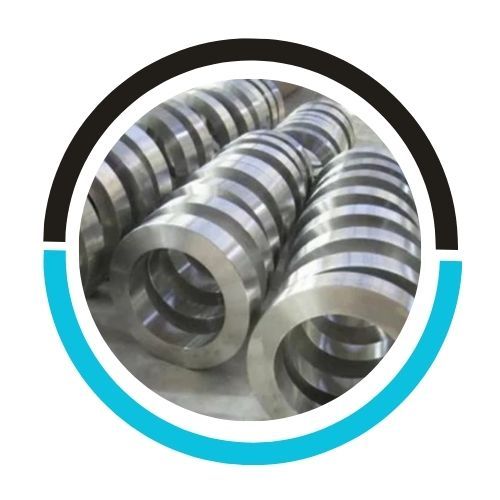
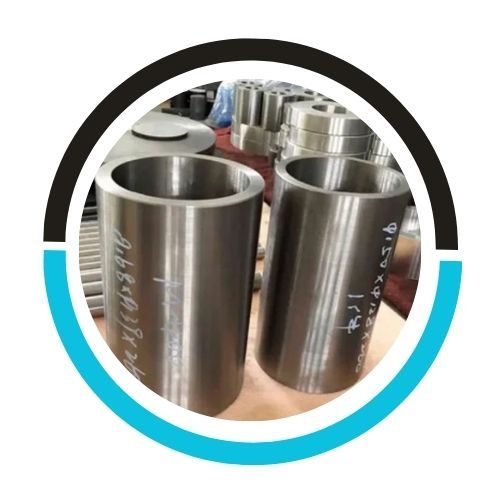
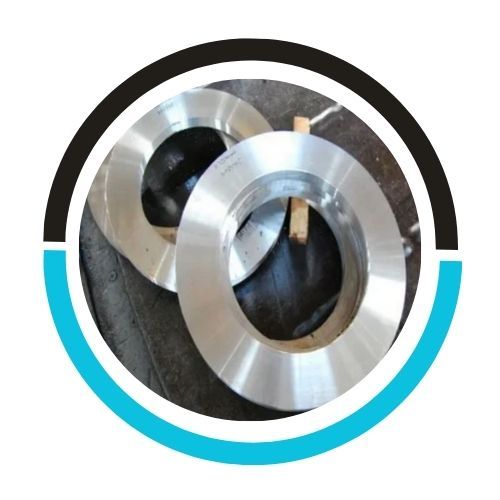
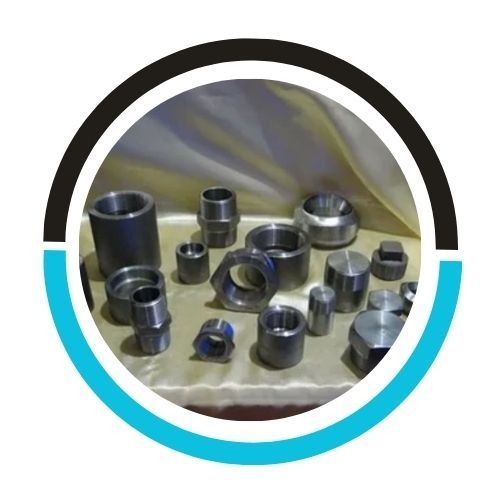
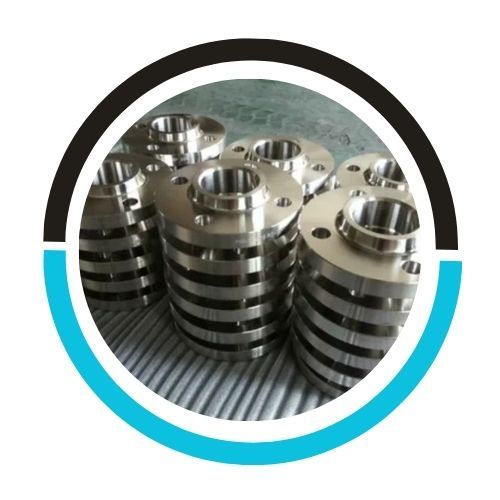
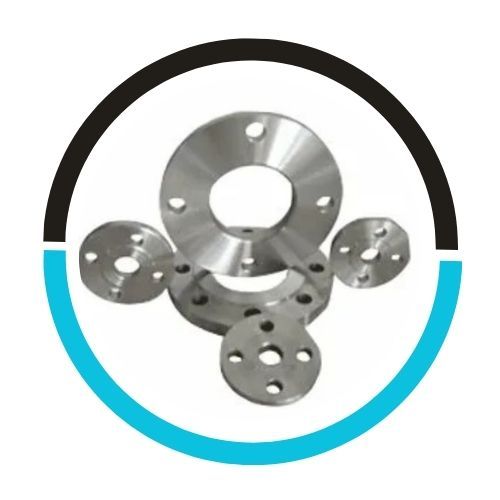
Nickel Alloy 201 Forging uses are as varied as the sectors they support, led mainly by the aerospace, railway, construction and automotive industries, along with petrochemical, nuclear, medical, Oil & Gas, Chemical, Pharmaceutical, Food & Beverage, Nuclear, Thermal Power plants, Paper and Pulp, marine and mining, etc.
Chemical Processing: Nickel Alloy 201 forgings find widespread use across chemical processing industries, covering the production and handling of acids, alkalis, and various other corrosive substances. They withstand corrosion in both reducing and oxidizing conditions, which makes them appropriate for parts like valves, pumps, and reaction vessels.
Electronics: Owing to its strong electrical conductivity and resistance to corrosion, Nickel Alloy 201 serves electronics applications. It frequently appears in connectors, electronic components, and lead frames where dependable electrical performance is essential.
Aerospace and Defense: Within aerospace and defense uses, Nickel Alloy 201 forgings serve in parts demanding high strength, corrosion resistance, and reliability. These encompass aircraft engine components, aerospace fasteners, and defense system components.
Identify Application Requirements: Grasp the working conditions and setting where the forging will be applied. Take into account elements like the range of temperatures, exposure to corrosion (chemicals, seawater, etc.), mechanical loads, and needs for electrical conductivity.
Corrosion Resistance: Nickel Alloy 201 is recognized for its outstanding resistance to corrosion. Identify the particular corrosive substances or surroundings the forging will be subjected to. Confirm that Nickel Alloy 201’s ability to withstand acids, alkalis, and other corrosive materials aligns with what the application demands.
Mechanical Properties: Assess which mechanical characteristics the forging requires, including tensile strength, yield strength, hardness, and toughness. Based on your application, these traits may have to be balanced to maximize performance under load or within high-stress conditions.
Yes,Nickel Alloy 201 forgings are recyclable once they have been used. Nickel alloys, Alloy 201 among them, are highly recyclable because of their valuable metal content. Recycling helps conserve resources, lowers energy usage compared to primary production, and promotes sustainability across many industries.
Yes,Nickel Alloy 201 forgings are well-suited for hygienic and sanitary uses. They provide outstanding resistance to corrosion, cleanliness, and biocompatibility, which makes them perfect for food processing, pharmaceutical production, and medical devices where hygiene and sanitation are essential requirements.
Nickel Alloy 201 forgings resist galvanic corrosion when combined with other metals. Thanks to its high purity and low carbon content, it reduces the likelihood of galvanic corrosion when in contact with dissimilar metals, making it well-suited for applications where such concerns are important.
Yes,Nickel Alloy 201 forgings are suitable for underground use. They provide outstanding resistance to corrosion from soil and groundwater conditions, which makes them ideal for buried piping, tanks, and structural parts across sectors like oil and gas, utilities, and infrastructure projects.
Email: sales@koasteel.nz