
Home > Copper Nickel > Copper Nickel Bolts
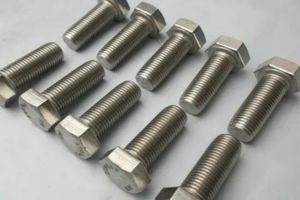
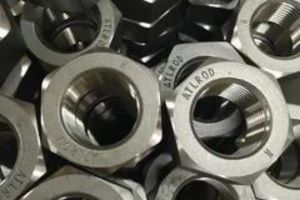
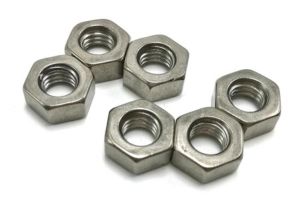
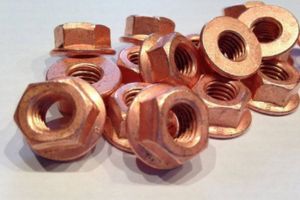
Set out on a path toward exceptional performance with our Copper Nickel Bolts, prominently featured on our product pages. We provide an extensive selection of top-tier solutions carefully designed to satisfy varied industrial requirements. Enter a world of adaptability and dependability with our thoughtfully engineered products suited to a broad range of industrial uses. Our products showcase precisely developed designs that comply with rigorous industry standards, highlighting longevity and outstanding corrosion resistance. As a dependable supplier, client satisfaction stands as our foremost concern, evident in our adaptable choices, competitive rates, and swift delivery services. Whether in construction, manufacturing, or engineering projects, our Copper Nickel Bolts represent excellence and innovation, providing superior performance. Our steadfast dedication to perfection strengthens your business with reliable solutions, guaranteeing success and confidence in every deal.
| Grade | Cupro Nickel 70/30 (UNS C71500) |
| Specifications | ASTM / ASME SB 151, SB 152 |
| Standards | DIN, ASTM, BS and all International Standards |
| Length | UPTO 5 METERS |
| Size | M4 To M100 | Custom Sizes |
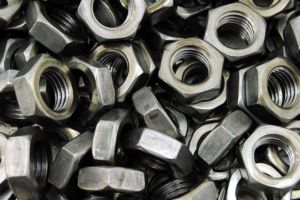
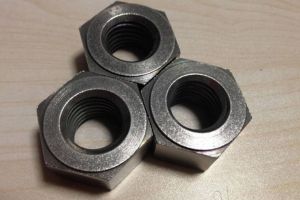
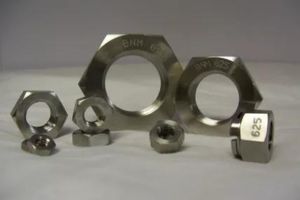
| Form | Nuts, Bolts, Washers, Screw |
| Types | Hex Bolts, Flange Bolts, Hex Head Bolts, Lag Bolts, Square Bolts, Eye Bolts, U Bolts, T Bolts, Counter sunk Bolts, Hex Head Nut, Eye Nut, Dome Nut, Coupling Nut, Square Nut, Acorn Nut,Hex Head Cap Screws, Socket Set Screws, Anchor Screws, Socket Head Screws, Concrete Screws, Shoulder Screws, Threaded Screws, Machine Screws, Machine Washers, Flat Washer, Star Washers, Sealing Washer, Lock Washer etc. |
| Element | Density | Melting Point | Tensile Strength | Yield Strength (0.2%Offset) | Elongation |
| Copper Nickel | 0.323 lb/in3 at 68 F | 2260 F | 50000 psi | 20000 psi | 30 % |
At Koasteel, we take pride in being the largest supplier and manufacturer in the New Zealand, delivering innovative solutions for every one of your piping requirements. With advanced production facilities strategically positioned in the New Zealand, we maintain an extensive inventory of more than 25,000 tons of top-quality materials kept ready in stock.
Reach out to us for a fast quote tailored to your requirement.
We supply these Copper Nickel Bolts conforming to DIN, ISO, JIS or ANSI Standard.
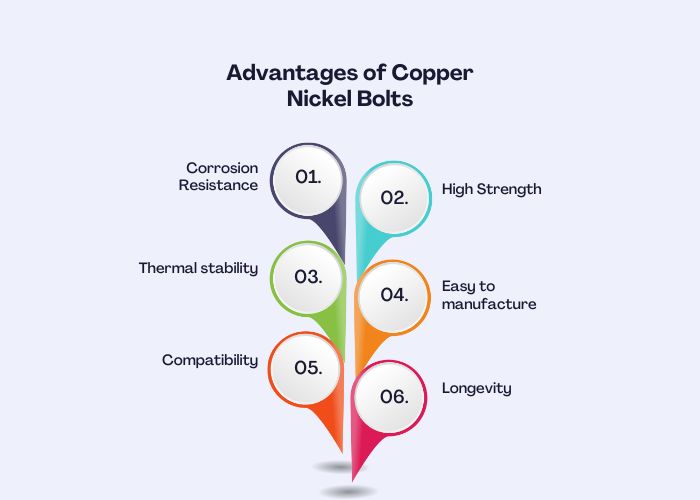
Corrosion resistance: Copper-nickel bolts offer excellent resistance to corrosion, particularly in seawater conditions. This characteristic makes them well-suited for marine applications where contact with salt water can speed up the deterioration of other products.
Biological resistance: Beyond withstanding salt water, copper-nickel bolts also demonstrate resistance to biological growth like barnacles and algae. This lowers the need for regular cleaning and upkeep, particularly in structures submerged in seawater.
High strength: Copper-nickel alloys typically possess strong mechanical properties, strength, and flexibility. This guarantees that the copper-nickel wires can endure heavy loads and stresses without breaking.
Thermal stability: Copper-nickel bolts maintain their mechanical properties across a broad range of temperatures, making them appropriate for use in both hot and cold environments with minimal corrosion
Easy to manufacture: Copper-nickel alloys can be readily produced using standard methods like machining, welding and fabrication, and custom bolts are engineered to fit specific applications.
Longevity: Because of their resistance to corrosion and biological contamination, copper-nickel bolts last longer than bolts made from other materials. This raises the maintenance cost, and downtime throughout the life of the equipment or structure is lowered.
Compatibility: Copper-nickel alloys work well with many other materials frequently used in marine and corrosive settings, including stainless steel and various polymers. This enables the spatial fabrication of composite structures with various essential materials.
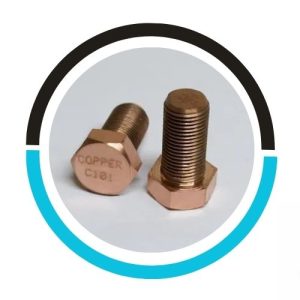
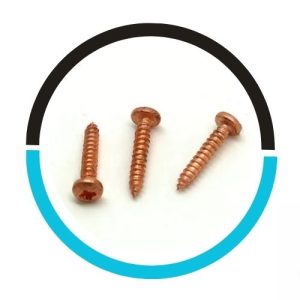
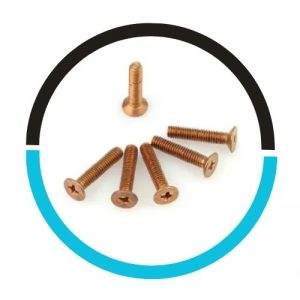
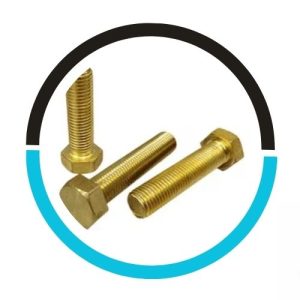
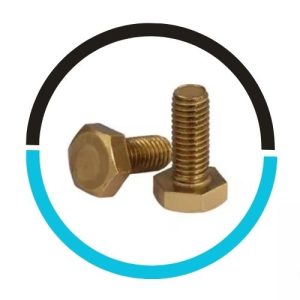
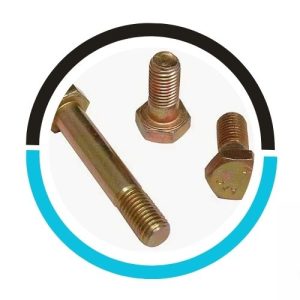
Copper Nickel Bolts serve applications as varied as the industries that use them, led chiefly by the aerospace, railway, construction and automotive industries along with petrochemical, nuclear, medical, Oil & Gas, Chemical, Pharmaceutical, Food & Beverage, Nuclear, Thermal Power plants, Paper and Pulp, marine and mining, etc.
Marine applications: Copper-nickel bolts offer excellent resistance to corrosion, which makes them well suited for marine settings. They are frequently found in shipbuilding, offshore platforms and marine pipeline systems.
Power generation: This kind of bolt is applied in power plants, particularly in systems that rely on water or steam, including condensers, heat exchangers and cooling systems
Oil and Gas Industry: Within the oil and gas sector, lead and nickel bolts serve in pipelines, valves and fittings wherever corrosion and corrosion resistance are needed
Chemical applications: Copper-nickel bolts are employed for equipment and piping systems in chemical plants thanks to their ability to withstand a range of chemicals
Desalination equipment: Bolts fabricated from lead and nickel alloy are widely used in desalination equipment where seawater and brine occur.
Heat Exchangers: Copper-nickel bolts are well suited for use in heat exchangers involving high temperatures and hot weather
Medical Equipment:Copper-nickel bolts can serve in certain medical applications, particularly where corrosion resistance and bacterial control are desired
Renewable Energy:They can likewise be applied in renewable energy such as wave and tidal power systems where seawater exposure is unavoidable
Automotive Industry:Copper-nickel bolts are used in automotive parts that call for corrosion and temperature resistance, such as air filters
Variations: Copper-nickel bolts come in variants such as C70600 (90/10) and C71500 (70/30). Select the grade according to corrosion resistance, mechanical characteristics, and price.
Corrosion Resistance: Take into account how much corrosion the bolts will face. Copper-nickel alloys are recognized for their outstanding resistance to seawater, salt, and a range of corrosive chemicals. Pick a grade offering the right corrosion resistance for your particular application.
Strength Requirements: Identify the mechanical properties your application requires, such as tensile strength, yield strength, and stiffness. A higher nickel content typically produces greater strength and hardness.
Heat stability: If the bolts will endure high temperatures, verify that the chosen grade can retain its mechanical properties under such conditions.
Size and Dimensions: Establish the suitable size, length, and thread type of bolts according to the mating components stated in the design specifications.
Standards and Specifications: Make sure the bolts satisfy relevant industry standards and specifications like ASTM, ASME, or DIN to guarantee quality and conformity.
Budget Considerations: Weigh the cost of the bolts against your application’s performance needs. Although higher-quality compounds may deliver better results, they can also carry a higher price.
Supplier Name: Select a trustworthy supplier or manufacturer recognized for producing high-quality copper-nickel bolts. Seek out research, testimonials, and track record to confirm credibility.
Consultation: If you are uncertain, turn to experts or engineers who specialize in materials and corrosion to assist you in selecting the most suitable copper nickel bolt for your particular application.
Yes,Copper nickel bolts can be recycled. Copper and nickel are both metals with excellent recyclability, and their alloys—copper nickel among them—can be melted and repurposed to create new materials while losing very little of their original characteristics, which makes them eco-conscious options for a wide range of uses.
Copper nickel bolts generally are not attracted to magnets since they are non-magnetic alloys. Nevertheless, they might show minor magnetic characteristics based on their makeup and how they are processed.
When installing copper nickel bolts, take into account elements such as correct torque specifications to prevent over-tightening, which may cause material damage or failure. Furthermore, verify compatibility with the other materials in the assembly to avoid galvanic corrosion. Adhere to manufacturer guidelines for installation methods and employ suitable tools to preserve integrity.
Copper nickel bolts are usually not the material of choice for structural applications in which high strength is essential. Although they provide outstanding corrosion resistance, they do not possess the mechanical properties required for structural support. In these cases, materials such as steel or stainless steel bolts are commonly selected because of their greater strength and load-bearing capacity.
Email: sales@koasteel.nz